Thursday, April 18, 2013


上有天堂, 
下有苏杭.


UP THERE IS HEAVEN,
DOWN HERE IS SUZHOU AND HANGZHOU.


Published in China Daily (Online Edition)! 我的第一功劳。

Here's my first non-personal-blog piece of writing published outside of the Augsburg Echo. It's been a while since I updated here, but from now on I aim to write an original piece or respond to another piece of China-related writing once a week.

http://www.chinadaily.com.cn/china/mychinastory/2013-02/27/content_16260667.htm

Bonus pictures of Huangshan for you, loyal reader(s; I guess I'll be optimistic):


This is what Beginning-to-Believe Peak (始信峰) looks like on a clear summer or fall day. It's magnificent. Unfortunately, I had to steal this photo from somebody else.

This is what we had to contend with. My hardy Minnesotan-optimism gland really started to kick into overdrive at this point. 


Saturday, December 29, 2012

Literary Triumph Balanced by Grievous Personal Loss, Or, This Last Week.

There's something really gratifying about perfect strangers saying nice things about your writing; I'm fairly confident that every subscriber to this blog is a personal acquaintance of mine, which probably blunts the (very limited) feedback that I receive, and so when Alissa asked me to join in the Yuletide 2012 story exchange at Archive Of Our Own, a website dedicated to fanfiction (which I didn't realize was still a thing, MAN I was wrong about that), I guess my interest was mainly piqued of writing a) on a deadline and b) for someone who has asked for a specific 'fandom' and therefore would be both knowledgeable and expectant of something rather dynamic and entertaining. Since there aren't many fandoms I could write for (no Magic: The Gathering? No Starcraft? Come on!), I chose one I'd been very interested in, 西游记, or Journey to the West, the Chinese Buddhist epic featuring one of the original Tricksters, Sun Wukong. Well, in the interim, I moved to China, and with about a week left, I hadn't started the story, or even really read a single word of the gigantic novel I was supposed to pay homage to.

In the end, I churned this out: http://archiveofourown.org/works/602003 

The morning after it was due (so the evening it was due in the USA), I woke up, slightly hung over, and finished it in about ten minutes. I had grand plans for it, but honestly, it ended up being something of a personal disappointment. Judging by the comments, though, people really liked it and responded positively. That goes to show one cardinal rule of writing; that the author can never really be happy with their work, even if a lot of other people enthuse over it. I'm going to use that maxim for child-rearing as well, I think. Another maxim: fangirls and internetizens are people too, as long as they read what I write.

On the job front, teaching at TPR is just fine, a lot of teaching the book and keeping rowdy kids in line, but I also have found another job working with my guy 风, or Feng, a 30-something aviation mechanic (his exact job is murky, much like his English skills). Feng's a great help to me because we work together most every weekday from 9-noon, so while my friends are at work, I'm also out doing something productive and fun. I don't charge very much, and we have a pretty friendly relationship, so I'm hoping that after Feng and I are done working with each other, we'll be able to just chill out. His English test is in mid-February, so there's lots of time for him to improve, under my careful tutelage. Right now, I've tasked him with summarizing Garfield comics panel by panel, and I look forward to reading his narratives.

You're watching "Fun with Feng".

I was in Macau yesterday to meet Tim's friend Jimmy, a guy I had only met once briefly before, but we had a real easy time just hanging out. I took him on a brief tour of some of the historic districts, then we went and ate a leisurely and gigantic dinner at my favorite restaurant, (Name Withheld), knocked back some beers, and headed over to the Venetian, an ungodly monument to avarice, where I drank Jameson and Jimmy drank Jim Beam. That showed 'em! We took our leave of each other around 8 PM, Jimmy headed back to Hong Kong and I on my way to Zhuhai. 


After passing through the borders without incident, my wallet was stolen on the bus ride home. I felt foolish and I still do. Still, the things I'm mad about losing were not of a monetary nature; driver
s license, some photos of friends, and a ton of fortune-cookie fortunes. Those, those are the ones that hurt.

Sunday, November 18, 2012

I Think I'm Learning Chinese, I Really Think So...

Someone call Child Services.
The first time I went to China, I was convinced I would be able to learn the language through osmosis; simple constant exposure to the Chinese populace, Chinese media, the promise of language classes through my employer, and the constant chattering of my students would all provide me with ample opportunities to progress quickly from an ignorant 老外 into a savvy man of the people.

As it turned out, I was hilariously wrong, for many reasons.

I spent tons of time around Chinese people, true, but they spoke in fast and incomprehensible local dialects, not the standard Mandarin I was learning. I had a television for all of two days before my roommates and I decided it was poisonous to our social aspirations, so we got rid of it. Our language classes were briefly illuminating, then were quickly bogged down by the constantly revolving roster of students. And my students were eager to teach me Chinese, but only at the expense of learning English, so in deference to the people who were paying me, I didn't ask too many questions of my students about Chinese.

Linguistically, too, the odds were not in my favor. Developing an ear for tones, a faculty for writing and identifying the thousands of characters that make up even a poorly-educated person's vocabulary, combined with my own youthful bewilderment and penchant for substance-based excess ('50 cents for a bottle of Tsingtao? Five, please, and keep the change!'), made dedicated study, if not an impossibility, a highly unlikely occurrence.

Being back in the States these past few months, I've been applying myself in a much more sober (in several meanings of the word) manner to learning Chinese, particularly the written language. It's been slow going, but I can feel that slow expansion of my brain that means I'm really storing this information somewhere.

My methods: a wonderful website called Memrise, a book of the 'First 100 Chinese Characters' (to practice my writing, which is abominable), a Chinese conversation book, a copy of "The Little Prince" in Chinese/English, which I assume I'll be able to read in a few years at the rate I'm going, and several Chinese friends with whom I can practice my Pinyin.

For all Chinese learners, I think it's crucial to have as much of the language cemented in your head as possible BEFORE you leave; I found that the longer I was in the country, the more the language seemed to be out of my grasp. Hopefully, all of this front-loading will allow me a larger linguistic base to work off of.

Ah, well. We all know I'm just going for the food, anyway.


Thursday, October 25, 2012

Torn (Cut) from the Papers!

Presenting the totally lame and, therefore, awesome Judge Parker
As a kid, I loved to read the comics page of the newspaper, especially Sunday, when it was in color, and 'Prince Valiant' was, well, king. I don't know why, but that comic is one of those touchstones of my youth, and when I stopped eagerly snatching the Sunday comics from the huge Sunday edition of the Pioneer Press, I guess I knew that I had grown up. 

In retrospect, 'Prince Valiant' is pretty weak in terms of writing, and I never had any idea what was going on, and the illustrations are in that classic '50s-pulp-novel-cover style that gives all men the same basic proportions and chins and all the women the same heaving bosoms. 

Here's a more recent strip I fetched out of the murk of the interwebs for you to see what I'm talking about:


Basically, the six-panel structure is never deviated from, and the annoyingly self-important narrator is pretty much always that way. When you're young, though, you just sort of wait for the resolution that next week's strip might offer, although even at that age you probably know it's not coming. It's like cheering for your local terrible sports team (holla atcha boy, MN sports fans), resigned to your continued support because there's nothing else to cheer for.

Recently, though, I've been reading and appreciating a strip called "Judge Parker". My family has begun reading the Star Tribune instead of the venerable old PP, so I've been able to see some different comics, and I think good old Judge Parker is the pick of the litter.

Now, I haven't done any research on the history of the comic, and I don't want to. I really believe that great comics can create interest, self-contained stories, and be evocative n just a few short panels, and I've come to see old Judge Parker (still don't really know much about him, or anyone else) as a great example of simple and effective writing. Here's an awesome one:

It's two panels, and it's pretty asinine, but I really laughed hard at this one. There's something audacious about this. I especially love the second panel and the way the men's flight is drawn - it's very reminiscent of a Marx Brothers or Abbott and Costello movie, and there's really no reason for all those extra 'N's except to heighten the silliness. To me, it's hilarious, and a lot better than boring old Prince Valiant. 

Although, that Aleta is quite the lioness...

Join me next time, where I explain the proper way to read Fred Bassett.

'Rebel Blades': My Greatest Cinematic Triumph


The new Corridor Digital movie is out, and it looks great. As I'm writing this, the video's been viewed over a million times, and voyeur that I am, I've gone through the Youtube comments on the video. Some gems:

"If this is not used for official advertisement for this game, I will be seriously pissed. This was just too fucking awesome! I wanna see this on TV

"Way better action then most hollywood movies!"

"The main villain's acting was freaking brilliant!"

Yeah, I helped make this movie. Give me my Webbo!

My parents watched it sort of blankly, but really liked seeing our woods and pastures featured in the video. My dad also pointed out that the barbed-wire fences were rather anachronistic, which I think is sort of nit-picky. Can't he just be happy that his son was the soundman on a hugely successful movie? He's obviously jealous. 


Sunday, October 14, 2012

Books I can recommend re: China


The best thing, besides actually going there, is reading about the places you want to go, so before I went to China I read a lot. While I was there, I read a few more books, and when I came home, I continued to read. There’s no shortage of books on the subject, but here are a few monographs I recommend:


J. Maarten Troost is a solid writer, and a funny one, so while his tales of exploits through the Middle Kingdom, from Beijing to Guangzhou to Yunnan and Tibet, steadily elicited chuckles and nods of recognition from me, I still found myself a little put off by the wide-eyed, culture-shocked-foreigner approach he takes in his travelogue. This is a man whose previous book was entitled “Smoking Pot with Cannibals” (I looked it up, it's actually 'Getting Stoned With Savages'); I think he can handle a little bit of organ meat or a few days in the smog of Beijing.


For me, China was neither so eye-poppingly strange nor so difficult to adjust to; the gimmick here is the strange food, the strange customs, and Troost mines it for humor and a bit of poignancy when he can. Still, unlike other books on this list, the author can’t really get close to the real issues affecting China and its people, because he’s set up a shield of disbelieving detachment, which, while funny, is largely unaffecting. Read it because it’s a fast, fun little book, not because it really adds much to an understanding of the politics and personality of ‘Planet China’.


For me, Peter Hessler’s River Town was a sometimes-great book that lost a lot of credibility when it veered into judgment calls of Chinese culture and lengthy explanations of personal frustrations and setbacks. Oracle Bones, though, is a more even, interesting book and shows Hessler’s personal growth since first arriving in rural Sichuan province in 1995. 

It's clear Hessler has become more comfortable with including his own narrative in his stories, and it's far less annoying and more germane here. For one thing, he’s moved to Beijing. For another, he’s doing some serious journalism here, following a few different threads through the book; ancient Chinese religious relics, the mutability of Chinese history, and China’s identity crisis as it faced the 2008 Olympics, agitation by minority groups, and the scars of the Cultural Revolution.


Hessler’s a better writer here than in River Town, older and wiser as a student of China and its intricacies, better able to capture the restlessness and rage that eddy under the country’s placid exterior. It’s a book that examines history and how it’s made, and lets the reader draw their own conclusions rather than passing judgment on such a conflicted, complex place.

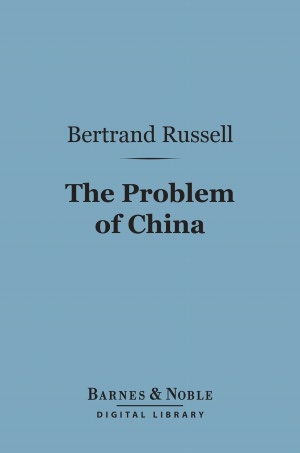
Bertrand Russell, The Problem of China (1922)

This book was written in the 1920s, when China's political and cultural structure was very different from its current state, and yet it still manages to be lucid and important, because China is still dealing with many of the issues Russell raises: the education system, a greedy political elite, and a history of oppression and violence. As he journeys through the country and meets many of the newly-founded Republic of China's preeminent officials, Russell pieces together and compares Chinese culture and its accomplishments, advantages, and failings to Western ways and values.


Russell was an incredibly smart and interesting man, and this is a short, but important book that will help anyone understand the dynamics of modern China. I closed the book with a broader view of the factors shaping the students I taught in Zhuhai, and the challenges they face as they come of age in a rapidly changing country. 


Qiu Xiaolong, Death of a Red Heroine (2000)

This book reads like a culinary mystery written by a Shanghai bicycle-tour guide who loves shows like NYPD Blue. It's written by a man named Qiu Xialong, exiled in the United States after holding a fundraiser for the Chinese student movement in the late 1980s. He writes in English, and the prose is oddly comforting and blunt. For the author and the book's protagonist, it's more important to spend long moments reminiscing about Shanghai's allure (places, foods, people) than solving the crime. 


The prose is straightforward and not complex, but there is a solidness to the characters and a weight to the political and cultural commentary, capturing Shanghai in the early 1990s, when the Communist Party was undergoing massive upheavals. It's a snapshot of a country in flux, a postcard from a man who can never go back to Shanghai, and it's got enough soul to smooth out any rough edges. 

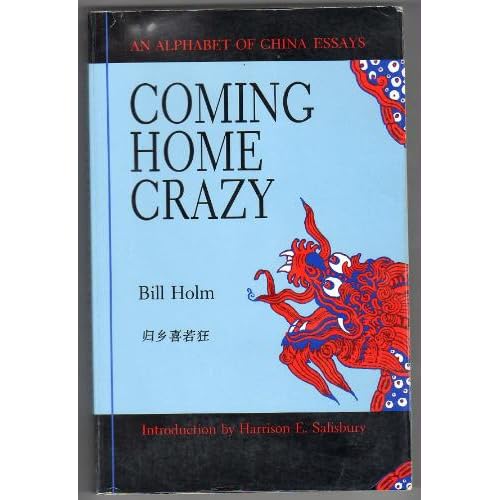
Bill Holm, Coming Home Crazy (1990)

This is a tremendous book by a tremendous hero of mine, so much so that it informs the URL of this blog. In 1986, Bill Holm moved from Minnesota to Xi’an to teach English literature. The resulting collection of essays is moving (“Underwear”), perceptive (“Dumplings”), and funny (“”). Most of all, Holm cleaves to the heart of the problem all travelers to China face: returning home. The rage and helplessness he feels while watching the events at Tiananmen unfold, the unexplainable antipathy toward the reasonable, nice Midwestern students and residents he encounters at home – there are emotions here that ring in me like a bell. This is a book to be savored. 

It helps, too, that Holm is a powerful and lyrical writer who writes clearly and honestly about the ups and downs of his years in China, yells at bureaucrats, eats too many dumplings, and wears his title of 'Barbarian' proudly around his ample waist. As a fellow Minnesotan, I take much comfort in this book, which I will read many more times in my life.